

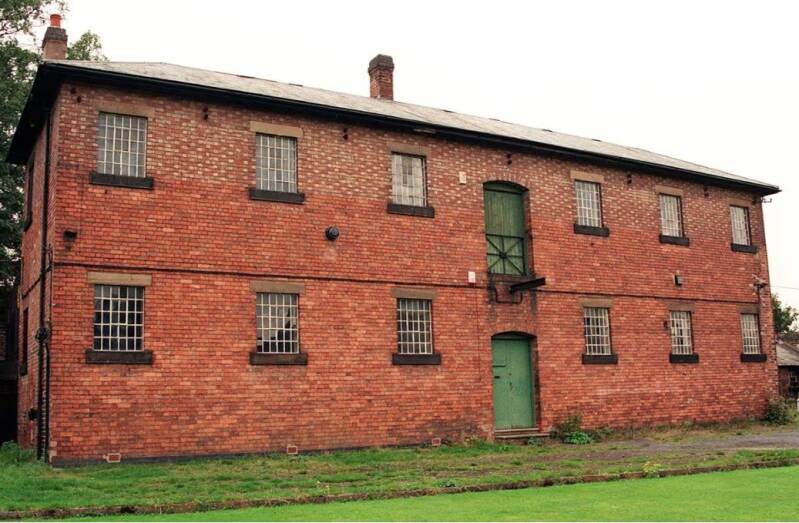
Rowditch Barracks, built in 1859 for the Derbyshire Rifle Volunteers, is one of Derby’s most unusual and historically significant military sites. Grade II listed, it stands as a rare and remarkably complete example of a 19th‑century volunteer barracks.
Situated just off Uttoxeter Road, the barracks served its original military purpose until 1877. Over the decades that followed, the site was repurposed many times, functioning variously as storage facilities, a laundry, an engineering works, public toilets, and a tennis club. Despite these changing uses, much of the original layout and fabric of the Barracks has survived.
Rowditch Barracks was designed by Derby architect Edwin Thompson, using red brick with ashlar dressings. The site is enclosed by a three‑metre‑high brick boundary wall, with the main entrance flanked by two guardhouses. Within the complex, the surviving structures include barracks rooms, a rifle range, officers’ quarters, wash houses, and privies, a remarkably intact collection for a volunteer military site of this period.
In 1998, Historic England recognised the barracks as an exceptionally complete and rare surviving example of its type, leading to its Grade II listing.
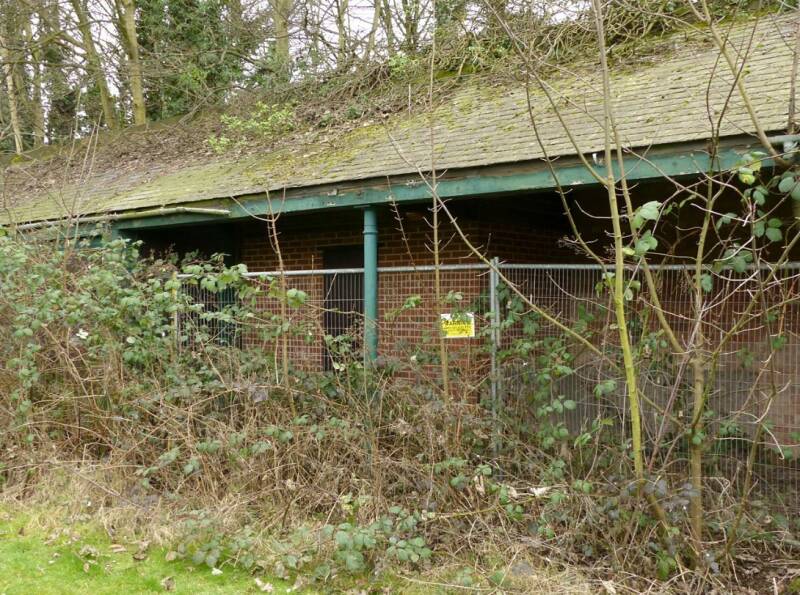
Despite its importance, Rowditch Barracks is now in a serious state of decline. Structural issues, water ingress, broken roof slates, and unchecked vegetation are accelerating its deterioration. Pigeon activity and visible damage to the roofline further threaten the building’s long‑term survival.
Derby City Council, the site’s owner, has stated that the barracks is on their monitoring list and that they are exploring options for its preservation. However, the pace of decline has raised concerns among local heritage advocates, including Derby Civic Society.
Our chairman, Ashley Waterhouse, has been monitoring the condition of the barracks for several years. His most recent visit revealed a clear and worrying deterioration: vegetation climbing the walls, roof slates missing, water ingress evident, and inappropriate modern materials, including metal ridge sheeting, used in repairs to one of the guardhouse roofs. Such materials are not consistent with the requirements for a listed building.
Ashley has written to Derby City Council to raise serious concerns about the ongoing neglect, and he has also contacted Historic England to highlight the urgency of the situation.
Rowditch Barracks is not just a relic of Derby’s military past — it is a rare survivor of a once‑common but now largely vanished building type. The city council has both a legal and moral responsibility to ensure that this historically significant site is properly maintained and protected for future generations.
A more detailed history of Rowditch Barracks, written by Maxwell Craven, can be viewed here.
Add comment
Comments